Doulas and Midwives are an Integral Part of Maternal Health Systems
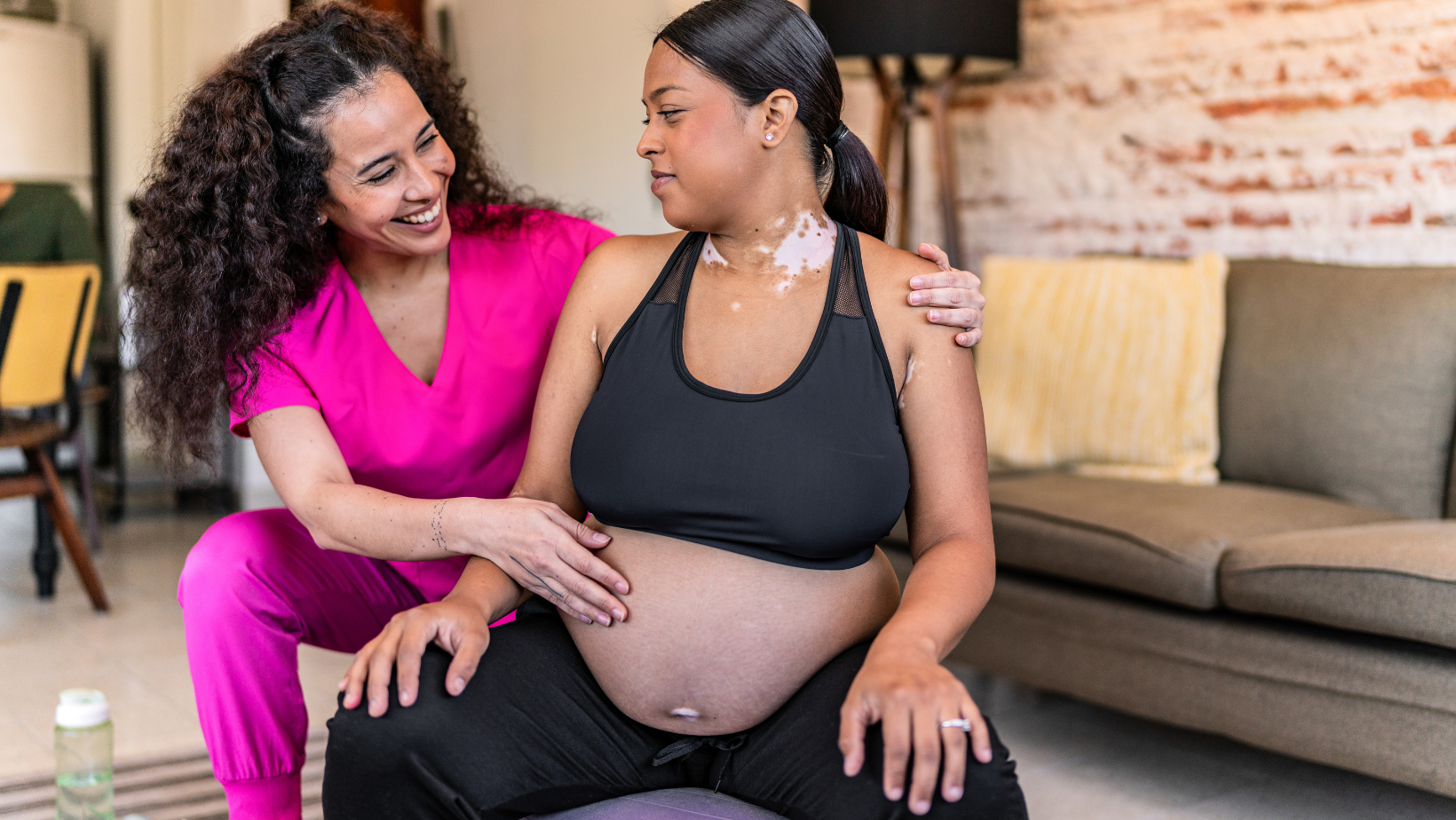
This February marked 100 years of Black History Month, which originated from “Negro History Week” in 1926 to honor and celebrate past achievements, contributions, and triumphs of Black Americans. Black History Month also creates space for conversations around Black futures, and in the case of the health care field, how access to equitable, community-driven, bias-free perinatal and maternal health care helps communities thrive.
What we hear related to Black maternal health largely focuses on statistics and stories that highlight the disparities in experiences and rates of death and injury that Black mothers face when attempting to give birth, and through the first year of postpartum. Conversations about Black maternal health should not only center around the preventable outcomes, but also include actionable change at the community, system, and policy levels. In thinking about the issues we face today, we can call back to the past of Black communities in the U.S. for some strategies, such as access to doulas and midwives.
Since the systematic extraction of knowledge and erasure of Black Grand Midwives in the late 19th and early 20th centuries, there has been a steady resurgence to regain and reclaim this work at the individual and community levels and integrate the knowledge and solutions that have been proven to improve outcomes.
Why focus on doulas and midwives, and what’s the difference?
Doulas and midwives are not new—these roles are rooted in Black community traditions and practices of care, support, listening, and witnessing. These roles also understand that reproductive health experiences, and in particular birth and postpartum, are more than medical events. But what’s the difference between doulas and midwives, and how do their roles help combat Black maternal health disparities?
Doulas
Doulas are specially trained support professionals who work with people before, during, and/or after birth and other experiences in a variety of settings. Doulas generally provide four categories of support to their clients and their families: emotional and mental; information and resources; advocacy; and physical/comfort measures and techniques. Although doulas are trained professionals and have a wealth of knowledge about things like pregnancy, birth, and postpartum, they don’t provide medical care.
One reason people find doulas valuable is the relationship between a doula and their client, the consistent presence throughout their journey, and the cultural and whole-person-centered support pregnant people and parents receive. Doulas provide support throughout different settings and assist in a variety of experiences (like cesarean birth, trying to get pregnant, abortion, birth control, and period care). They typically provide home visits and check-in calls, one-on-one education, health care advocacy and navigation support, and referrals and connections to local resources to help you meet your needs.
Doulas provide a personalized and whole-centered approach to support for people and their families with an understanding of and attempts to address barriers to care, social determinants of health, and the impact of racism and bias on access and provision of care. Evidence shows that when people work with doulas, there are decreases in cesarean sections and medication use and increases in satisfaction with the birthing experience.
Midwives
In contrast, Midwives are healthcare professionals who provide care before, during, and after birth. They also provide comprehensive health care for reproductive and sexual health and family planning (like birth control and annual exams), primary care, and newborn care. The types of midwives allowed to provide medical care and in what settings depend on each state, as well as what types of medication they can provide and their scope of care. Similar to doctors, midwives can do things like provide physical and cervical exams, provide medications, patient education, and order lab testing.
Midwives support their patients using a midwifery model of care, which is an approach to birth that focuses on supporting the uninterrupted biological processes needed for birth, seeing the pregnant person and baby as an active team in the birth process, personalizing the care and education a patient receives, and using minimal interventions, as appropriate, during birth. Midwives can be found in a variety of settings (like hospitals, birth centers, and homes). For midwives who support births in a hospital setting, they can still provide care if someone decides they’d like to use medication pain relief, like an epidural. When midwives and the midwifery model of care are integrated, evidence shows high satisfaction levels with people’s experience, more collaboration and autonomy, and improved health outcomes for parents and babies.
The U.S. system of reproductive and maternal health care includes maternity care deserts, discrimination, disparities, and gaps in care, resulting in higher mortality and morbidity rates in general, but especially for Black women and women in rural areas. Concentrated efforts to increase access to doulas and midwives for communities are needed, but it's just one piece of the puzzle. What can be done at the systems and policy levels to make this happen?
What could help increase access and improve outcomes?
For lasting change, we need thoughtful implementations that remove barriers, hold players in these systems accountable, and create a supportive workforce that is able to provide respectful, culturally congruent, and community-minded care.
In recent years, we’ve seen a lot of work focused on reducing financial barriers to accessing doulas through doula reimbursements for Medicaid across various states. We’ve also seen doula access addressed through hospital and community programming that partners with or trains doulas and attempts to integrate them into care models, task forces, and conversations about how to improve experience and outcomes. Continued advocacy around expanding coverage of doulas, increasing reimbursement rates, and expanding the covered types of support care to include preconception, miscarriage, abortion, and stillbirth is still needed. Additionally, local hospital policies and culture shifts are needed to ensure doulas are welcomed and included as vital parts of the support team.
Priorities areas specific to midwives include increasing the number of midwives available to communities, especially midwives of color, and training other clinical roles on the midwifery model and approach to care. This includes things like funding and loan repayment for midwifery education, expanding the scope of practice and authority for midwives, and improving reimbursements for midwifery care (especially for out-of-hospital care). Additionally, related to the training of doctors and midwives, updating the training that doctors receive to expose them to the midwifery model and approach to care, and providing incentives and increasing the number of available sites for midwifery preceptors for training are essential.
As we honor 100 years of Black History Month, we honor the legacy of Black midwives and doulas who have advocated for and provided safe, respectful care and support, and look to this legacy to help us build the future of maternal health where Black birthing people are heard, believed, protected, and celebrated. Black maternal health is not just about preventing deaths; it’s about supporting life where people have the resources, respect, and autonomy to thrive. It requires commitment—from communities, from health systems, and from policymakers.